Menopause Messing With Your Skin? Here's How To Deal

Yads Cauchi is a Dermal Clinician, Nutritionist (BHSc, MSc) and Beauty Journalist. She's also a mum of four. Evidence based skin health and nutrition are her thing and she works from her own skin clinic based in Canberra - you can find her there, or on Instagram and TikTok @yadscauchiskin.
Perimenopause and menopause commonly drop oestrogen, causing less collagen, reduced hydration and thinner, more sensitive skin, average age of menopause is 51 and many women see changes in their 40s. This piece covers practical product swaps, targeted serums, moisturisers, gentle exfoliation and clinic options to manage menopausal skin.
Fast Facts You Need to Know
- Swap drying gels for a cream cleanser like La Roche-Posay Toleriane.
- Use antioxidant and peptide serums, plus a retinal to boost collagen.
- Choose hyaluronic and ceramide moisturisers, add Cosmedix Remedy oil if very dry.
- Protect daily with broad spectrum SPF and consider clinic lasers or ultrasound to stimulate collagen.
One of the most common phrases I hear from women 40-50+ years in my clinic is - “Help, I don’t look like myself!"
And honestly, it’s the change in the skin during these decades that can have a lot to do with perimenopause - which of course leads to menopause that can be to blame.
The Skin And Menopause.
You see, the average age of menopause is 51, however it does vary from woman to woman, but typically, menopause can happen between the ages of 45-58. (Although obviously there are cases when it can and does begin earlier.)
However, it's the years before menopause hits when many women start to feel and see a lot of symptoms that could be attributed to the perimenopause-menopause journey.
e.g. Hot flashes/night sweats, increased anxiety, irregular periods, sleep issues - and of course, skin issues.
Does Perimenopause Cause Skin Issues?
In fact, often when I’m chatting to women in clinic and I drop the sentence “Have you ever considered you might be perimenopausal?” it can come as a bit of a shock - because we don’t talk about it enough!
However, all of these issues that people describe are signs that the body is producing less estrogen.
And a lack of estrogen = less collagen production, less hydration and just an overall loss of resilience for the skin; because estrogen is an important hormone that supports our skin cell functioning and can reduce inflammation, and protect against oxidative stress.
So when we start to produce less of it, not only does our body go through some wild changes that can make women feel different, but all of a sudden the skin can start to sag, wrinkles start to appear, neck concerns become an issue and skin can become thinner.
Hence where the “Help! I don’t look like myself” comments come from.
Does menopause cause dry skin on the face?
It’s substantiated by a lack of estrogen.
And let me assure you it’s very common and why often skincare routines need tweaking to adapt to additional dryness/loss of elasticity and a greater focus on age management focused skincare.
Common Skin Concerns With Menopause.
Here's a checklist for you:
- Dryness (including itchiness for some as oil production declines).
- Loss of elasticity/wrinkles.
- Increased sensitivity.
- Acne breakouts (I’m sorry, but this is a period of major hormonal fluctuations so yes, acne can continue to appear and can happen at any time.)
Best Products For Menopausal Skin.
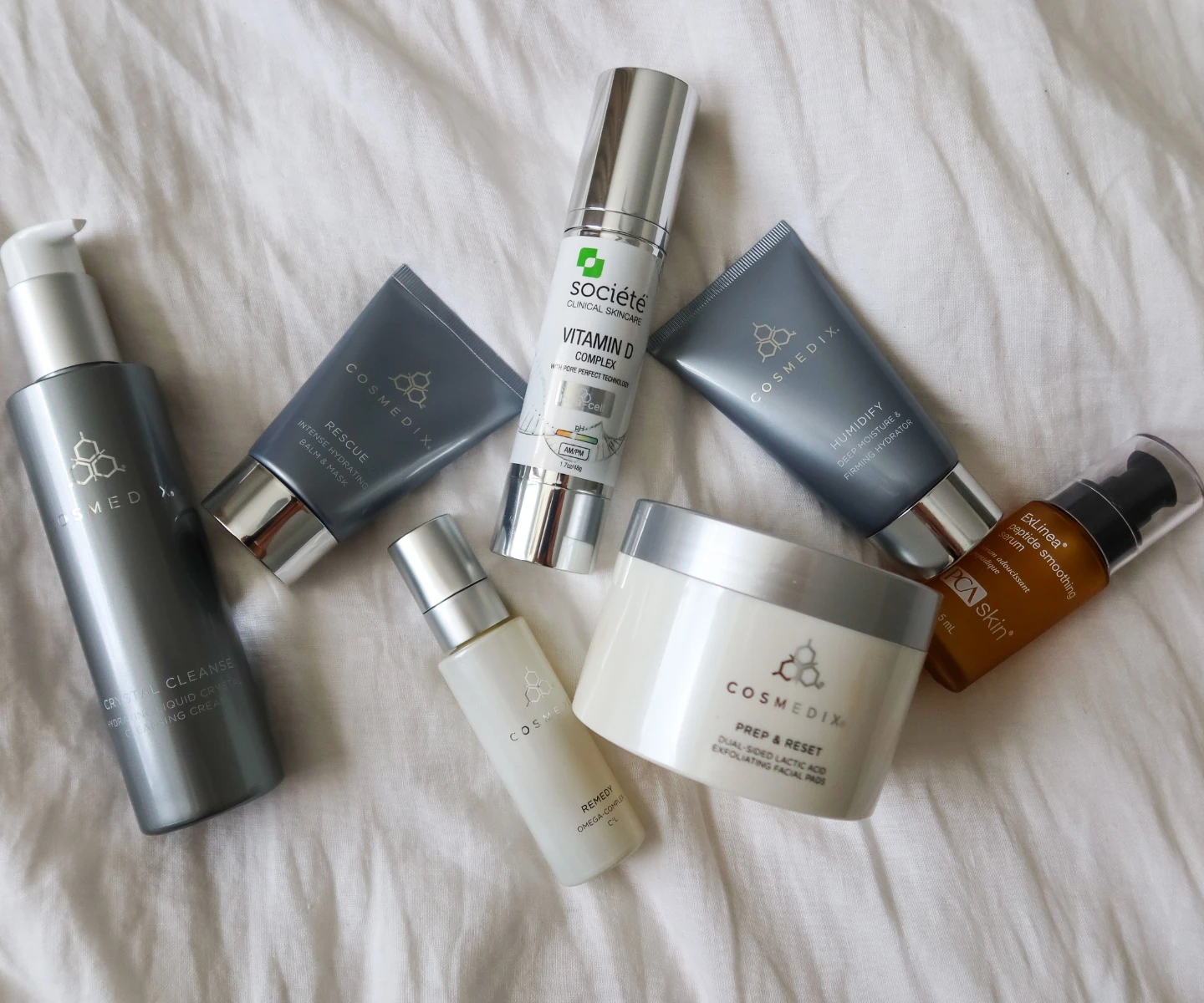
So how can you manage menopausal skin?
As a dermal clinician, I am always telling my clients to let their concerns be their guiding light!
So that is what you should do.
Speaking to a professional, including your doctor is also going to be beneficial but when what has always worked for you is no longer working for you then it's time for a skincare change - because, yes your skin is changing.
Below I’ve rounded up some products that can help tackle both ageing and dryness concerns to get you started.
Cleansers.
If your gel or foam based cleanser is no longer cutting it, switching to a cream or incorporating a more hydrating cleanser into your routine can be beneficial.
Try:
- Cosmedix Crystal Cleanse - 163.5ml - A cleanser best for dry/dehydrated skins. Never dries out the skin and effectively cleanses everything off.
- La Roche-Posay Toleriane Dermo-Cleanser - A budget friendly light and milky cream cleanse.
Treatment Serums.
Antioxidant serums here are key.
These play a crucial role in protecting the skin from environmental damage.
Peptide based serums can additionally improve overall skin texture and help manage ageing, while topical retinoids are the most effective at promoting collagen production and enhancing skin cell turnover.
Try:
- Societe Vitamin D Complex - A luxurious, hydrating cream formulated with Vitamin D to soothe and protect damaged skin that occurs with age. It also contains boosting peptides to promote a firmer, more even skin tone and less visible fine lines.
- PCA Skin ExLinea Peptide Smoothing Serum 29.5g - A popular choice for anyone targeting fine lines and wrinkles, alongside their vit A or in place of. This peptide serum delivers immediate plumping and firming effects and long-term benefits like reduced wrinkles and improved skin texture.
- mesoestetic HA Densimatrix - A bougie hyaluronic acid serum that seriously plumps the skin. Best for dry skins. It sinks in quickly and properly hydrates the skin.
- Medik8 Crystal Retinal 3 30ml - The ladder system of this vitamin A makes it a great option for beginners through to advanced. It’s a retinal based cream, formulated alongside hydrators to look after your skin. Start slowly.
- Medik8 C-Tetra Lipid Vitamin C Antioxidant Serum 30ml - I love this gentle vitamin C option, it’s a Tetrahexyldecyl Ascorbate derivative and an oil soluble formula making it perfect for a drier, more mature skin.
Moisturisers and Oils.
Moisturisers with ingredients like hyaluronic acid and ceramides are crucial for maintaining hydration and supporting the skin’s moisture barrier.
Skin that is still feeling very dry may benefit from an additional oil.
Try:
- Cosmedix Humidify Deep Moisture Cream - A rich, hydrating cream that deeply moisturises and firms the skin, helping to reduce the appearance of fine lines and wrinkles.
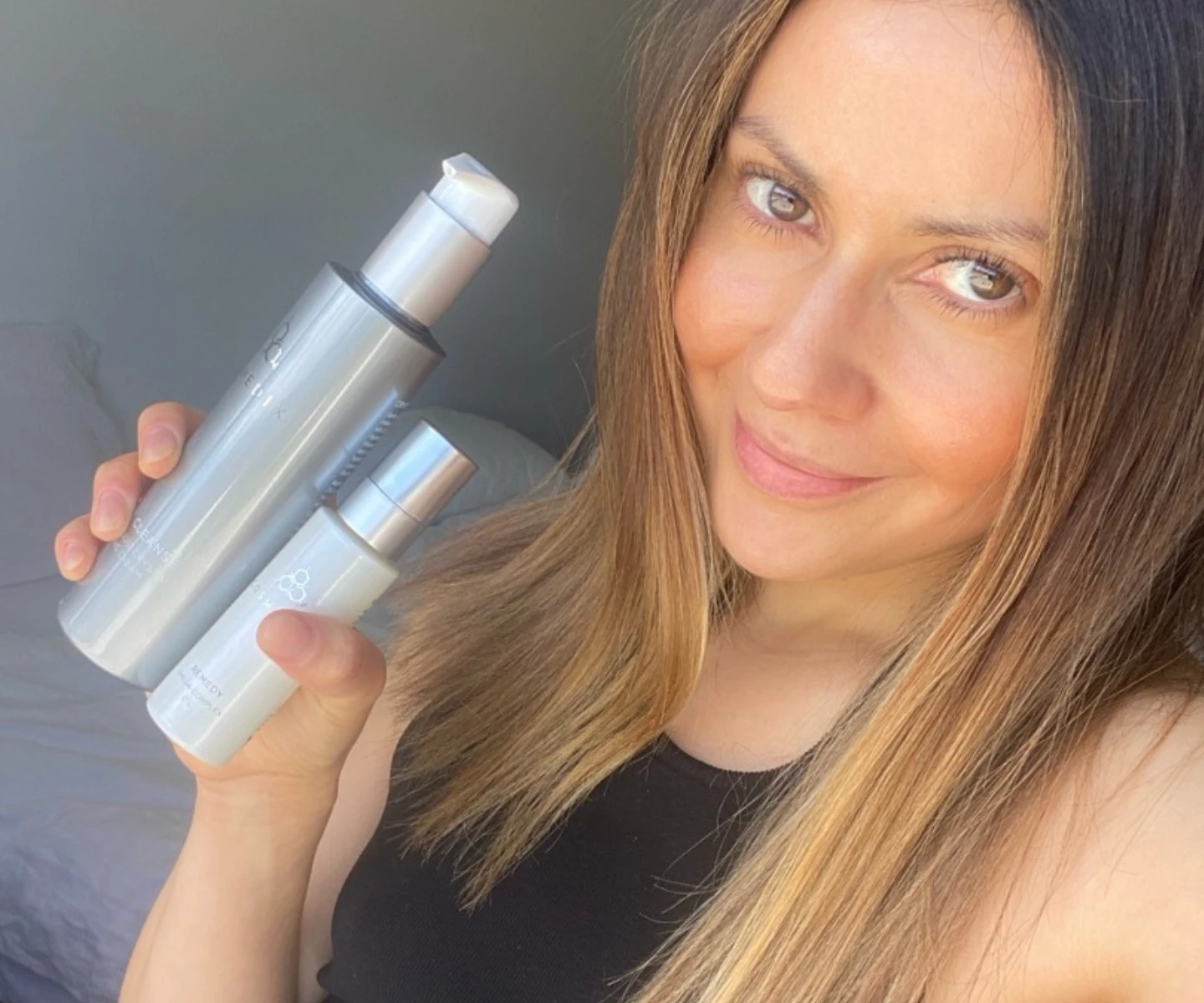
- Cosmedix Remedy Omega Complex Treatment Oil - Is a luxurious, multi-purpose oil that deeply hydrates and nourishes the skin. Best oil for a dry menopausal skin.
- Alpha-H Golden Haze Face Oil 25ml - this oil contains a blend of nourishing oils like camellia seed oil, jojoba oil, squalane, rosehip oil, sea buckthorn oil, and argan oil, along with antioxidants like vitamin E, great all rounder.
Exfoliants.
Exfoliants are so personal and very skin dependent, but gentle exfoliation is key!
Try:
- Cosmedix PREP AND RESET: Dual-sided Lactic Acid Exfoliating Facial Pads - these are a gentle lactic based mini at home peel. They deliver glowy skin without drying it out.
- Medik8 Press & Glow 200ml - This is a very gentle PHA based exfoliating toner. Great for a sensitive skin and can be used daily if needed.
Masks.
Still feel like your skin is void of hydration? This is where a good treatment mask comes in.
Use one a few times a week to help.
Try:
- mesoestetic hydravital mask 100ml - an intensively, nourishing moisturising mask. Will leave your skin glowy and hydrated.
- Cosmedix Rescue Intense Hydrating Balm & Mask - Sleep in this mask x1-3 times a week if dry skin is a major concern. It is a bit of a sticky formula but it’s great post treatment and/or when you just want to give dry skin some extra TLC.
Clinical Treatments.
Final note: in clinic lasers and ultrasound technologies are super effective at stimulating collagen and elastin production and fractional laser resurfacing can rejuvenate the skin.
Clinical procedures are particularly important for menopausal skin, because often skincare can only take us so far.
Protecting the skin from UV damage, wearing a broad spectrum SPF daily is also mandatory, alongside managing stress and having a balanced diet and lifestyle.
All of these things will work together to benefit overall skin health as we age, and if you’re still confused, chat to a dermal clinician, we can help!
Want more expert skincare advice from Yads? Read these helpful articles next: