Everything I Learnt Using Prescription Retinoids in My Skin Routine for the First Time

Emily Algar is a freelance writer, content consultant and creator, beauty journalist and great skin-haver.
Low on time? Check out our key takeaways below
Prescription retinoids like tretinoin work far harder than over-the-counter retinol because they contain retinoic acid, the form your skin can use straight away. Emily Algar documents her eight-week journey using Retrieve Tretinoin 0.05% to treat post-pill acne, sharing what worked and what surprised her.
Key takeaways from this article
• Prescription retinoids contain retinoic acid and work immediately; OTC retinol must convert
• The "retinoid uglies" of redness, flaking and breakouts are normal and can last four weeks plus
• Start once weekly with short contact time and buffer with moisturiser to limit irritation
• Results take three to six months and sunscreen is essential as tretinoin raises sun sensitivity
• Niacinamide and soothing picks like La Roche-Posay Cicaplast B5 help ease side effects
This account matters if OTC retinol has done nothing for you, or your doctor has suggested prescription-strength vitamin A. Emily's honest take on the purging phase and her specific product picks help you know what to expect and stay committed through the early discomfort. Back to the full article...
If a skincare pyramid existed (and I’m sure somewhere on the internet, it does), vitamin A would sit on the top.
Known to speed up cellular turnover and improve healthy skin functions, the well-studied ingredient can treat a multitude of concerns, from acne and pigmentation to fine lines and wrinkles.
Basically, it’s the gold standard in skin care, but vitamin A also comes in many forms and concentrations.
You’ve probably heard of or tried 'over the counter' (OTC) versions of vitamin A before, like retinol, retinyl palmitate or retinaldehyde.
These are all great and very effective, but some skin concerns require stronger, prescription-only forms of vitamin A.
When I went off the contraceptive pill nine months ago, my doctor suggested I try a prescription vitamin A or retinoid to help curb the post-pill acne I was experiencing.
Knowing and hearing about its transformative results, I gleefully filled the script and worked it into my night time skincare routine.
But with great power comes great responsibility… not to go too hard too fast and break your skin barrier.
Prescription retinoids yield serious power, and you have to use them properly or you risk burning your face, serious flaking and so on.
So alongside Dermatologist Dr Shyamalar Gunatheesan of Ode Dermatology, I’ve curated some tips on prescription vitamin A, how it’s different to a retinol serum, and how to use it safely.
Keep scrolling to read.
What Is Prescription Retinol?
Prescription retinol (also known as prescription vitamin A, retinoids or tretinoin) refers to forms of topical vitamin A that require a script from a doctor or dermatologist.
In Australia, you can only purchase these medical-grade skincare products after speaking to an expert who’s had the chance to look at and properly assess your skin.
“Prescription retinoids are more potent and contain retinoic acid, the most biologically active form of vitamin A. It works by binding to retinoic acid receptors found on the outer membrane of cells,” explains Dr Shyamalar.
Here are some examples of common prescription retinoids in Australia:
- Tretinoin: Commonly referred to as ‘tret’, this retinoid has a proven track record in treating signs of ageing and acne. It comes in various strengths and is marketed under brands such as Stevia A- 0.025%, 0.05% and 0.1%. Retrieve is another brand which contains 0.05% tretinoin.
- Adapalene: A retinoid that comes in 0.1% or 0.3% concentrations. It has a more stable chemical structure than tretinoin and does not degrade when used alongside other acne treatments like benzoyl peroxide.
- Tazarotene: A retinoid available in 0.1% and 0.05% creams indicated for psoriasis and acne.
How much does prescription retinol cost?
This will vary depending on the product you’re prescribed.
Tretinoin vs Retinol: Are They Different?
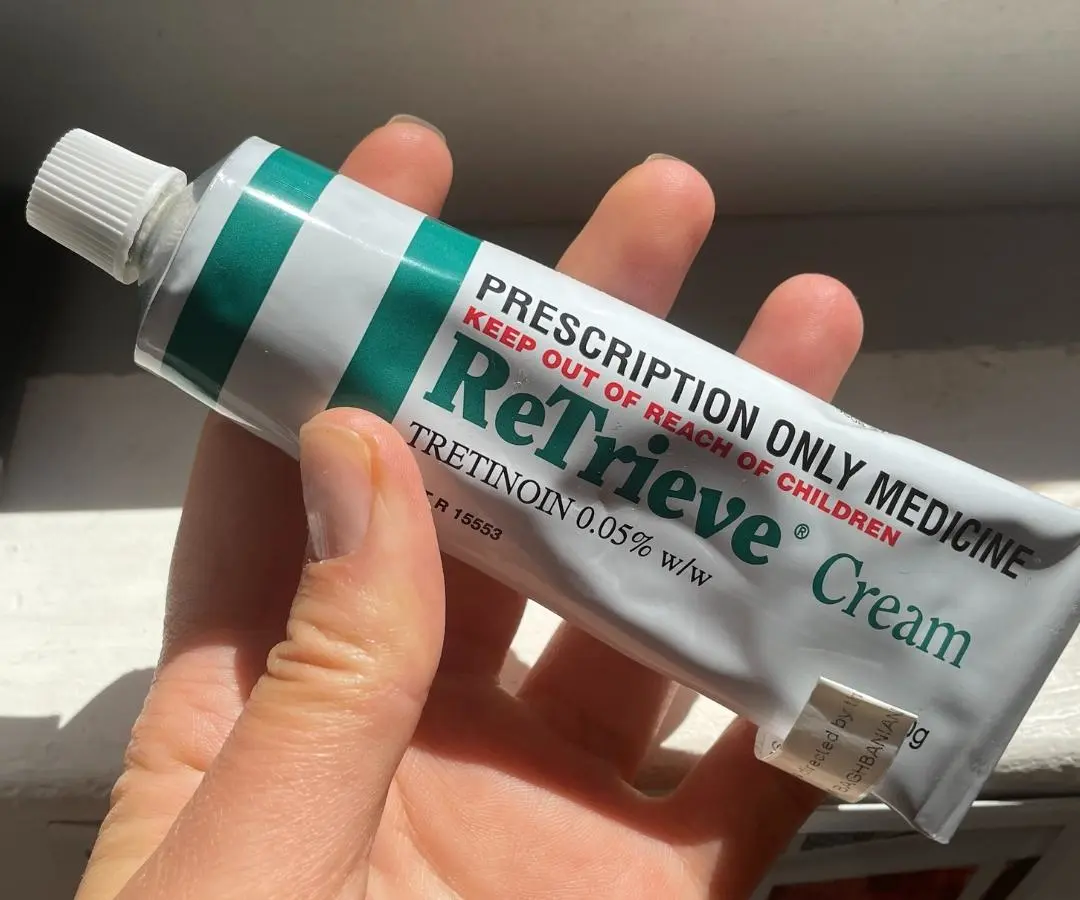
OK, but how is a tretinoin cream or prescription vitamin A product different to other skincare serums?
If you think of vitamin A as the umbrella ingredient, prescription retinoids are the strongest/purest form that falls within it.
This is because they contain retinoic acid, which is ‘available’ for the skin to use.
In comparison, OTC vitamin A products including retinol serums need to be converted into retinoic acid within the skin.
Dr Shyamalar adds, “OTC retinoids tend to contain retinols and retinyl esters that convert into the final retinoic acid.”
An easy (albeit simplified) analogy I like to use is this:
Retinoic acid speaks our skin's language, whereas other forms of vitamin A need to be translated.
This doesn’t mean other active skincare products you can buy online in NZ are inferior or ‘don’t work as well’, but some of the efficacy is lost in the translation.
Learn more about prescription vitamin A from beauty educator and chemistry PhD Dr Michelle Wong in this episode of the Skincare School podcast.
Do I Need a Prescription Retinol Cream?
Because prescription retinoid creams are prescribed, this really is a decision that should be made by your doctor or dermatologist.
But generally speaking, prescription retinoids are a proven and effective treatment for wrinkles, pigmentation, pores and acne, as well as improving skin clarity and luminosity.
If you have moderate to severe skin issues, or you’re not seeing results from OTC products, it’s definitely worth having a conversation with your doctor about it.
How to Layer Tretinoin.
Now for the (not so) fun part. The tretinoin purge.
Your medical professional should take you through any tretinoin side effects in relation to you personally.
But generally speaking, the caveat with prescription retinoids is that often, things get worse before they get better.
Affectionately referred to as the ‘retinoid uglies’, things like redness, irritation, flaking, and breakouts are common in the first few weeks.
You can learn more about adding vitamin A into your skincare routine in this YouTube video below.
Dr Shyamalar recommends you introduce prescription vitamin A in a gradual way, giving your skin time to adjust, thus minimising the side effects.
Here’s her advice on how to layer tretinoin in your skincare routine:
- The first night, apply a thin layer and wash it off in half an hour. Leave it longer before washing off the following night until tolerated.
- You could also try layering a moisturiser underneath, this technique is called ‘buffering’.
- Only use a pea-sized amount of product, and take short breaks when skin gets too irritated.
- Prep skin with a gentle soap-free wash and pat dry to make sure the skin is not damp, as this will increase penetration of the retinoid, thereby compounding the potential irritation.
- Make sure your skin barrier is optimised before introducing a prescription retinoid into your routine.
- Avoid the areas around the eyes, lips and corners of the nose.
- Be extra diligent with your sunscreen and don’t forget SPF is only one part of sun protection!
- Always seek shade, and wear sunnies, a hat and protective clothing. Use sufficient sunscreen for all unprotected areas and reapply sunscreen as directed. Always read the label. You know the drill.
My Prescription Vitamin A Skincare Routine.
And now for some anecdotal takeaways!
It can be confusing to figure out how to layer tretinoin in your skincare routine.
Personally, I’ve kept my skincare routine while using prescription retinoids pretty simple.
Avene Thermal Spring Water 300ml and La Roche-Posay Cicaplast B5 Mask 25g have been life-savers. They're very soothing on compromised skin.
Niacinamide or vitamin B3 is also a great ingredient to pair with your retinoid.
Medik8 Clarity Peptides 30ml is my pick. And SPF is CRITICAL!
Ultra Violette Lean Screen SPF50 Sunscreen 75ml is hard to beat, or La Roche-Posay Anthelios Invisible Fluid Facial Sunscreen SPF 50+ if you want something with a lighter texture.
My Tretinoin Experience So Far...
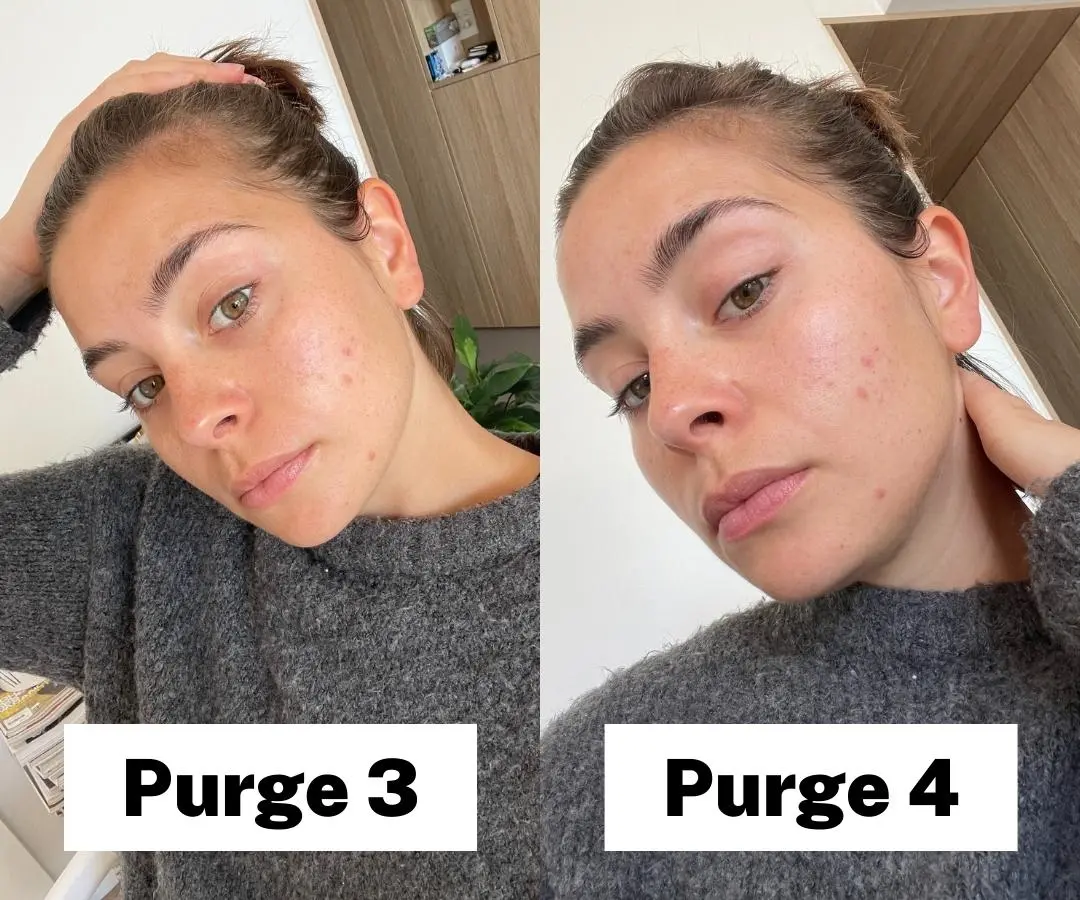
I’ve been using Retrieve Tretinoin 0.05% for eight weeks now alongside the products mentioned above.
I started once a week mixed into moisturiser, and then onto clean dry skin, and have slowly built up to three times a week.
I absolutely experienced the flaking and purging — to be honest, I think I still am purging.
My breakouts were the worst they’ve ever been in the first four weeks (see pictured above), and it seemed that new spots were popping up almost daily.
It’s definitely getting better, but I am still waiting to come out of this with skin as smooth as an egg.
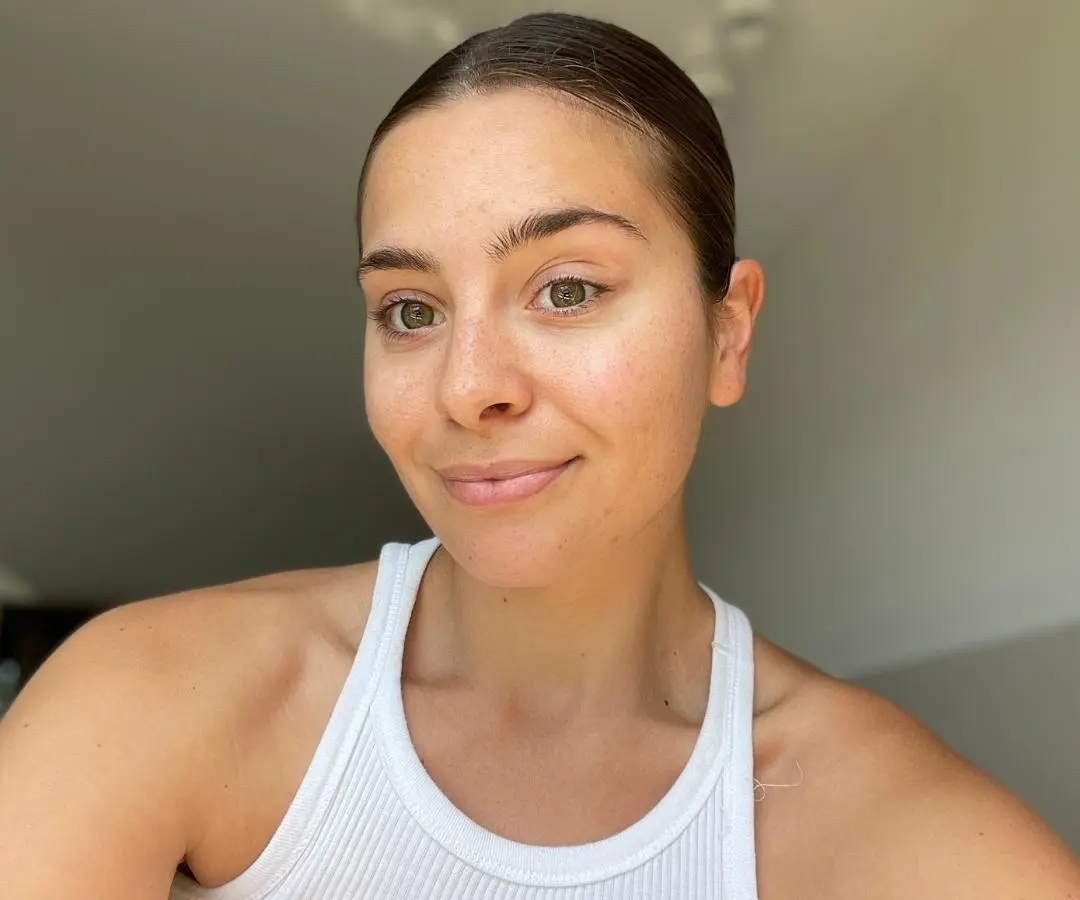
Here's how my skin is looking today.
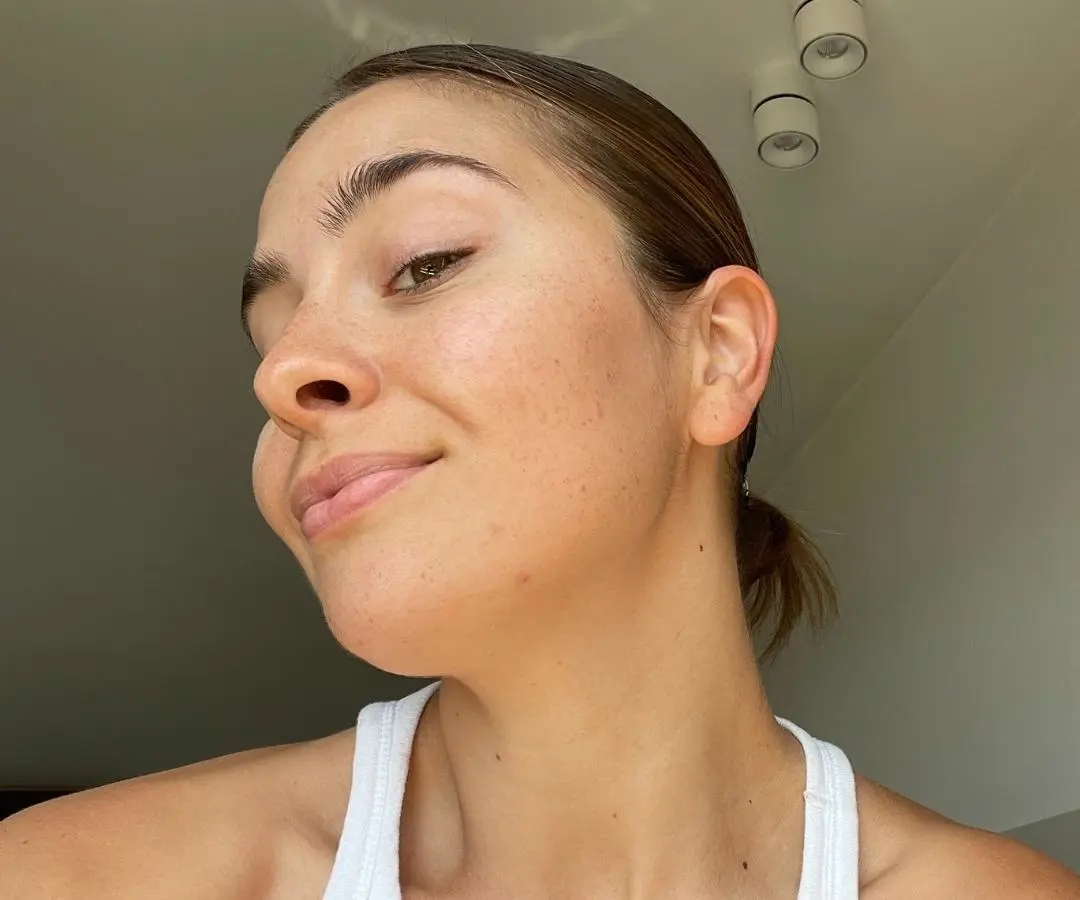
Dr Shyamalar explains that it can take three to six months to see results, so I’m determined to push through.
Overall, prescription vitamin A is a journey, and one that you have to stay committed to.
Education is also key — if you just slap it on like a moisturiser and forget to rinse off in the morning, you’ll do more harm than good.
But stick it out! It’s probably one of the most proven skin treatments out there — and a saving grace for so many battling acne, congestion, pigmentation and the like.
And always follow the professional, personalised medical advice from your GP or dermatologist.
You can read more retinol reviews and product recommendations in these articles below...